

Cosy by Design

Featured in our November Issue
There’s something special about a home that feels properly lived in. Not staged or overly polished, just warm, cosy, welcoming and ready for you to kick off your shoes, put the kettle on and settle in.
Creating that feeling does not require a full redesign. Often, it is the smaller details that make the biggest difference: warmer colours, layered textures, softer lighting and furnishings that make a room feel comfortable rather than carefully arranged.
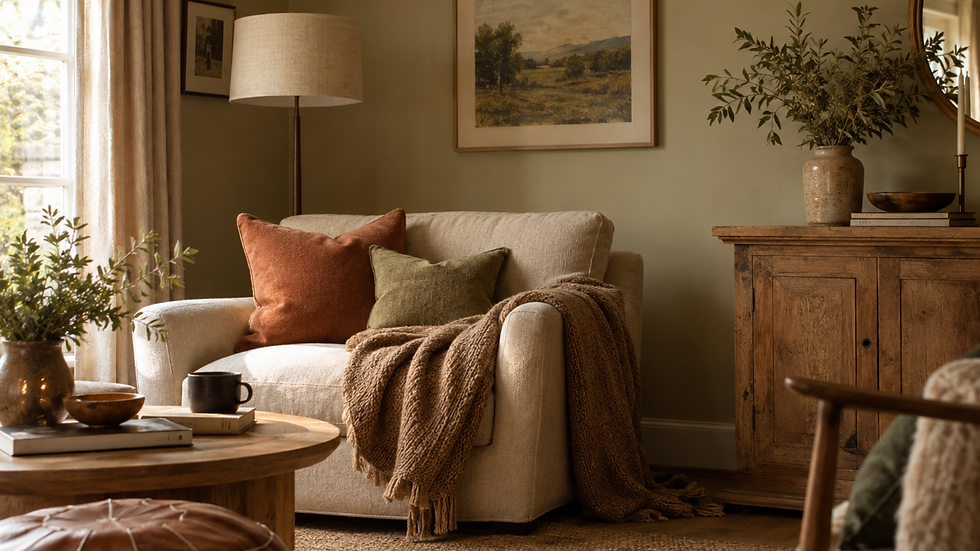
Start with colour
Colour has a huge effect on how a room feels.
Cool whites and greys can look fresh and elegant, but too much can make a space feel a little chilly, especially on those grey days when the sky seems to have forgotten what sunshine looks like.
Warmer shades such as oatmeal, clay, caramel, rust, olive and soft cream create a more relaxed feel. You do not need to repaint every wall either. Cushions, throws, rugs, curtains and artwork can all introduce warmth without much fuss.
If you prefer neutrals, choose shades with warmer undertones. Stone, biscuit and mushroom create a softer backdrop while still keeping things calm and understated.
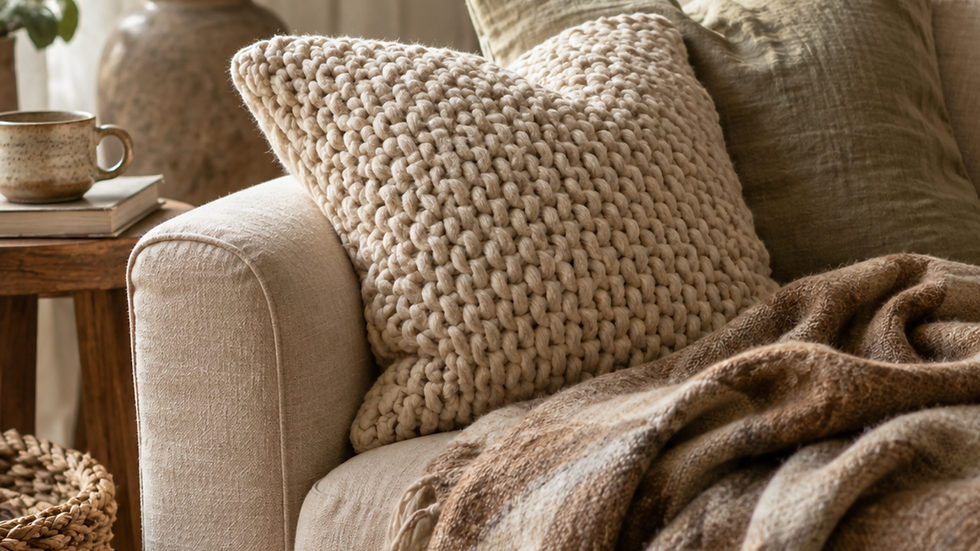
Layer up the texture
A cosy room should feel as good as it looks.
Mixing textures adds depth and stops a space feeling flat. Think wool throws, knitted cushions, woven baskets, soft rugs, linen curtains and wooden furniture.
Natural materials work especially well because they bring warmth and character without feeling overly styled. Wool, wood, leather and stone all have a reassuring quality, particularly when they show a little age.
And do not worry about everything matching. A room often feels more inviting when it looks collected over time rather than bought as a complete set.
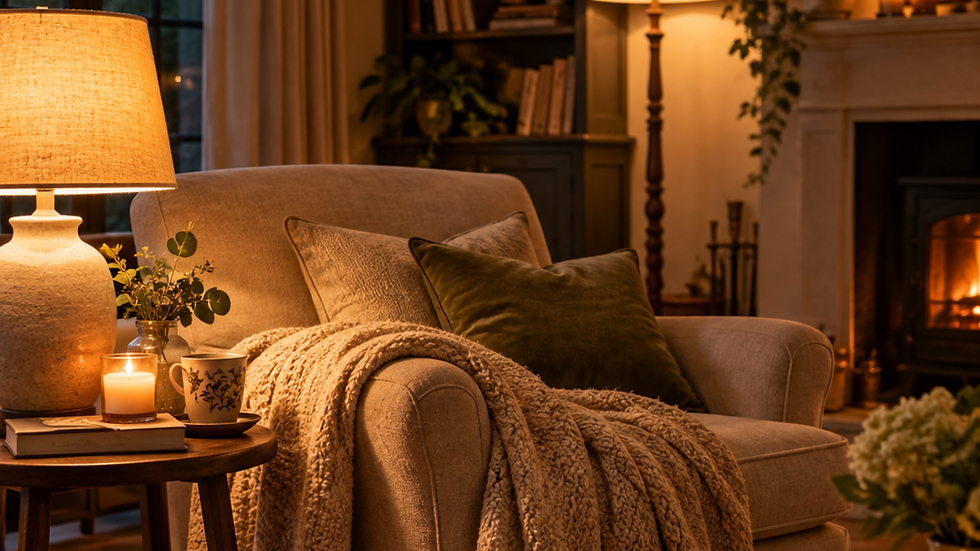
Get the lighting right
Lighting can completely change the mood of a room.
One bright ceiling light rarely creates much atmosphere, so try layering different sources instead. Table lamps, floor lamps and wall lights create softer pools of light and make a room feel more relaxed.
Warm-toned bulbs are usually more inviting than bright, cool ones, while candles add an extra glow in the evening.
The aim is simple: let your home glow rather than glare.
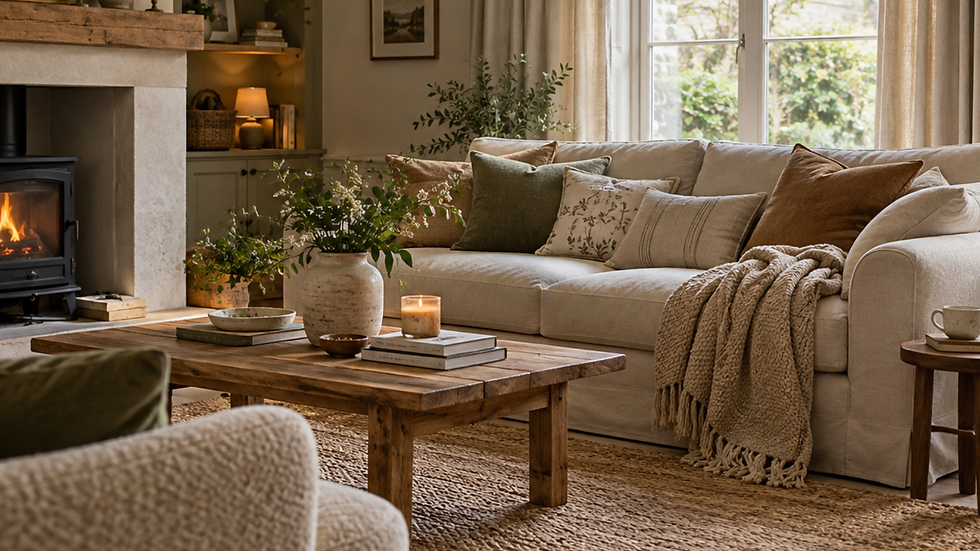
Make soft furnishings work harder
Soft furnishings are one of the easiest ways to make a room feel warmer.
Curtains soften windows and help reduce echoes, while rugs bring comfort underfoot and make larger spaces feel more grounded.
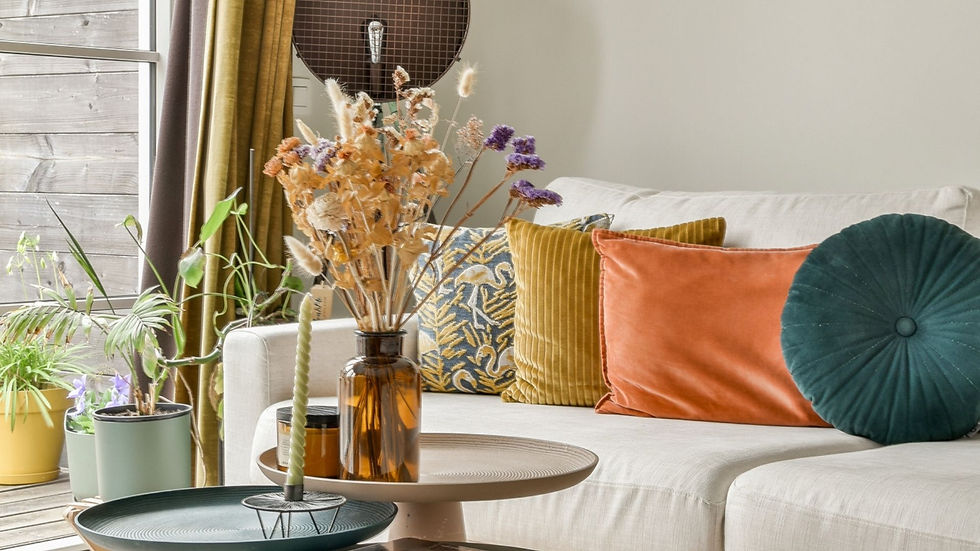
Cushions and throws add another layer. Mix different sizes and fabrics, such as velvet, wool, brushed cotton and linen, for a look that feels relaxed rather than overly coordinated.
A well-placed throw also earns its keep when the temperature drops and your feet decide the heating simply is not enough.
Bring in a bit of nature
Natural touches help a room feel calmer and more grounded.
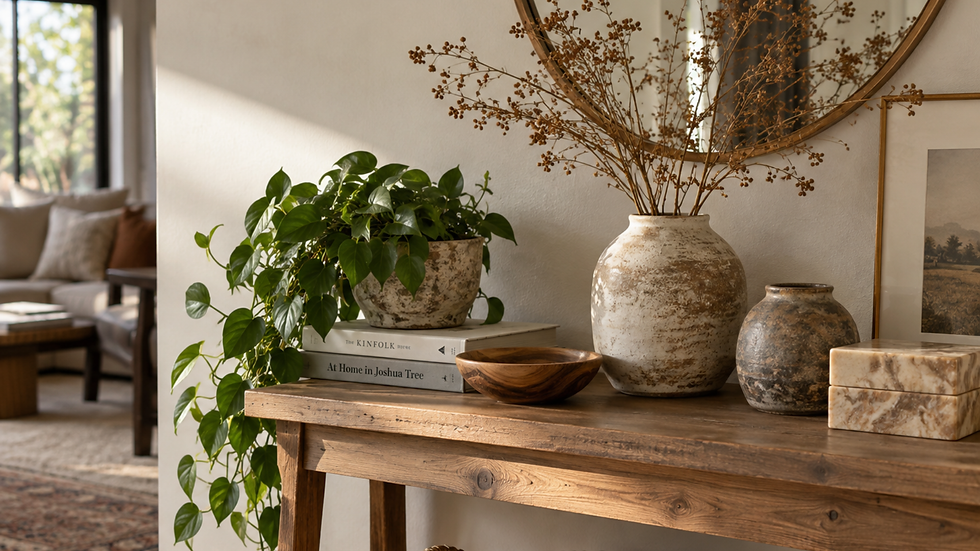
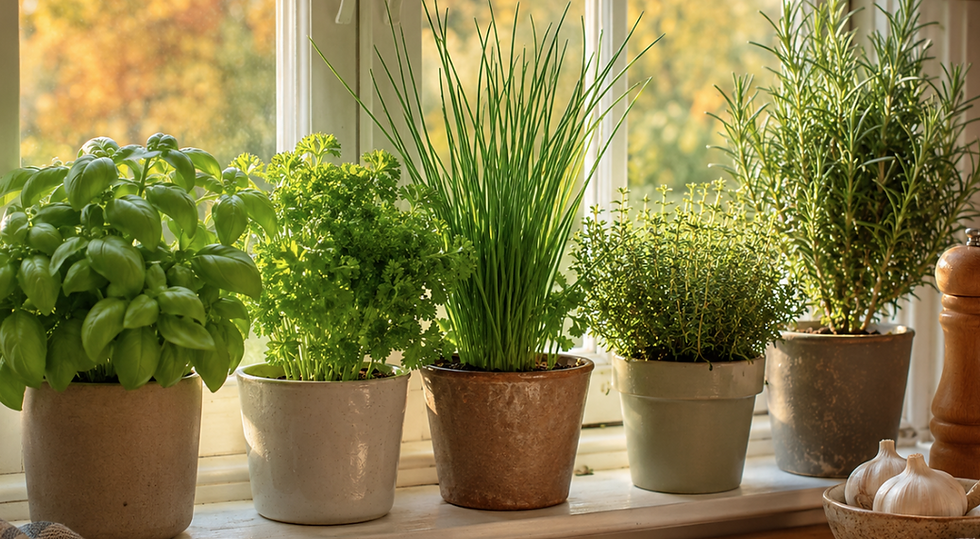
Houseplants, dried flowers, wooden bowls, stoneware and branches all work well. Earthy colours inspired by the landscape, such as mossy greens, heather tones and warm stone shades, can also bring a subtle sense of the outdoors inside.
The trick is not to turn it into a theme. A few thoughtful touches are plenty.
Let it look lived in
Perhaps the biggest secret to cosiness is personality.
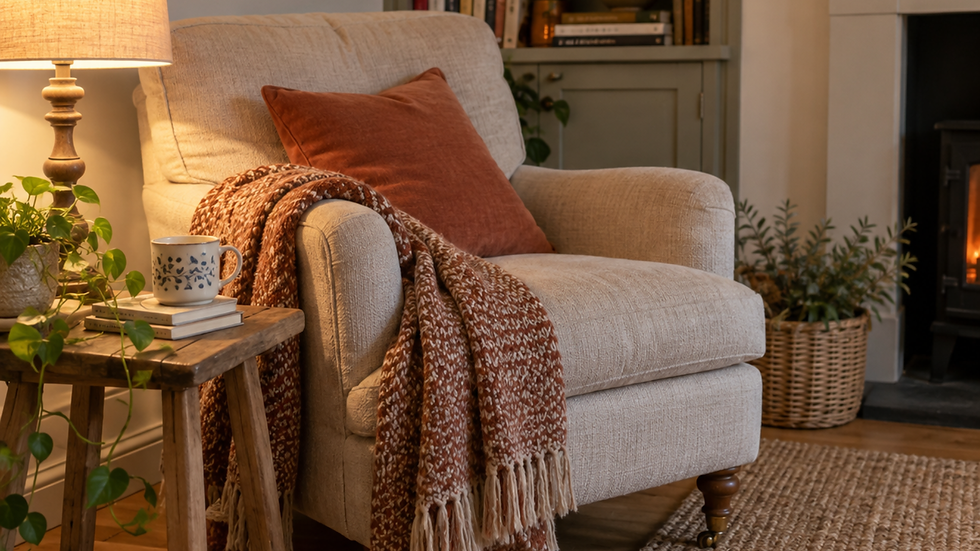
Books beside a favourite chair, family photographs, old furniture, handmade pottery and objects picked up over the years all help a room feel like home.
Perfection can sometimes make a space feel less inviting. A slightly crumpled cushion, a well-used table or a stack of books often adds more warmth than anything brand new.
Small changes, big difference
You do not need a huge budget to make your home feel cosier.
Start with the room you use most. Add a lamp, swap a cool bulb for a warmer one, introduce a textured throw or bring in a richer colour.
Small changes soon add up.
And when the rain is tapping at the windows, the kettle is boiling and you are tucked up somewhere comfortable, that is when cosy design really comes into its own.
Because ultimately, a cosy home is not about following a trend. It is about creating somewhere that simply feels good to come back to.


Comments